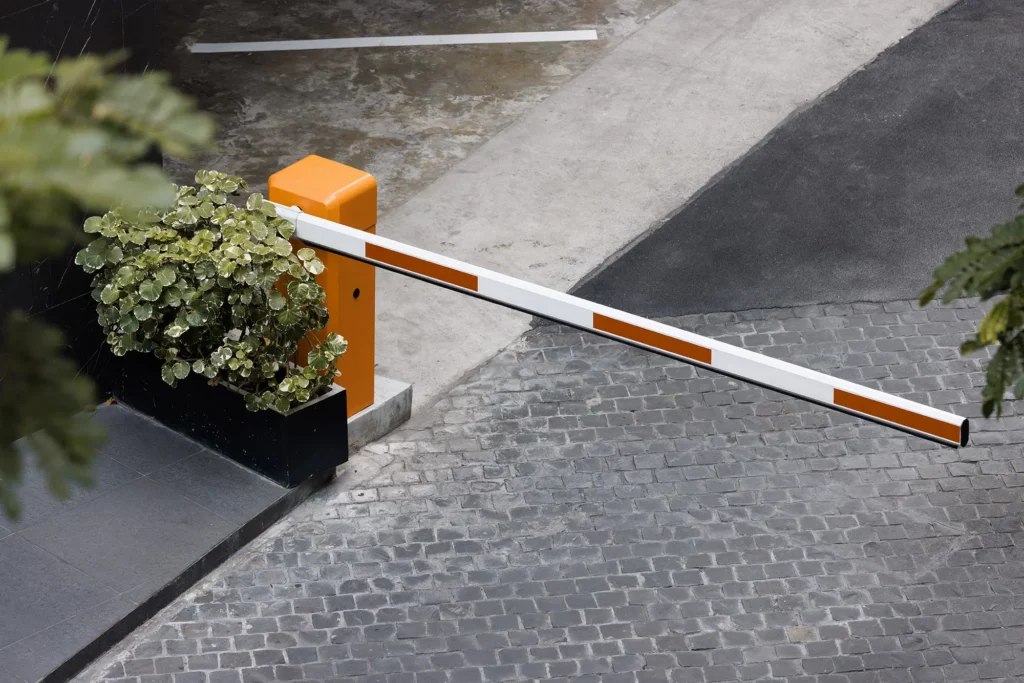
For decades, barriers were considered the standard in car park management. Yet in everyday life, they cause precisely the problems they were actually meant to solve. Five reasons why traditional barrier systems do more harm than good these days.
Monday morning, 8.47 am. Outside a retail park in North Rhine-Westphalia, traffic is backed up all the way to the access road. A barrier is jammed and the ticket terminal isn’t responding. Three vehicles are at a standstill, with a queue forming behind them. The phone rings in the retail park management office. It’s the third tenant this week to complain about losing customers.
Scenes like these are not isolated incidents. They are an everyday occurrence in thousands of car parks across Germany, whether at supermarkets, hospitals, shopping centres or residential estates. For a long time, barriers were regarded as the only way to manage car parks. Yet today, they often create more problems than they solve.
5 good reasons to remove barriers:
1. Traffic jams and congestion during rush hour
Every barrier is a bottleneck. On Saturday mornings in shops, during shift changes at hospitals, or during the evening rush hour in residential estates, traffic jams build up that spill out onto public roads. Customers drive on, patients arrive late, and residents complain.
2. High maintenance and downtime costs
Barriers consist of mechanical wear-and-tear parts: motors, barrier arms, ticket printers, coin validators and card readers. Any of these components can fail, and they do so regularly. Added to this are acts of vandalism, weather damage and the costs of service engineers, who often have to be on site within a matter of hours.
3. Poor user experience
Lost tickets, missing coins, malfunctioning card terminals: for end users, the pay barrier is often the most frustrating point of contact with a car park. At a time when contactless payment is the norm, a paper ticket system seems outdated. Any negative parking experience affects perceptions of the entire site.
4. Missing data
Traditional barrier systems provide, at best, rudimentary data. How many vehicles have entered and exited? That’s all. Information on dwell times, utilisation by time of day or the identification of unauthorised parkers is simply not available. Without this data, operators are making decisions in the dark.
5. Reputational risk
If a barrier fails to open or a vehicle is towed away in error, it can damage a business’s reputation. Retailers depend on customer satisfaction, clinics must not put patients off, and residential estates are accountable to their tenants. A single faulty barrier system can lead to complaints in Google reviews, letters from tenants or enquiries from the press.
Conclusion: There is a better alternative
Barriers no longer solve the problems they were originally designed to address. The good news is that there is a tried-and-tested alternative. In our next article, we’ll show you how barrier-free parking works with ANPR technology and why making the switch is easier than you might think.