A blocked customer car park is not a logistical problem. It is a revenue problem. Why non-customers parking in retail car parks cost retailers more than expected, and what chain reaction they set off.
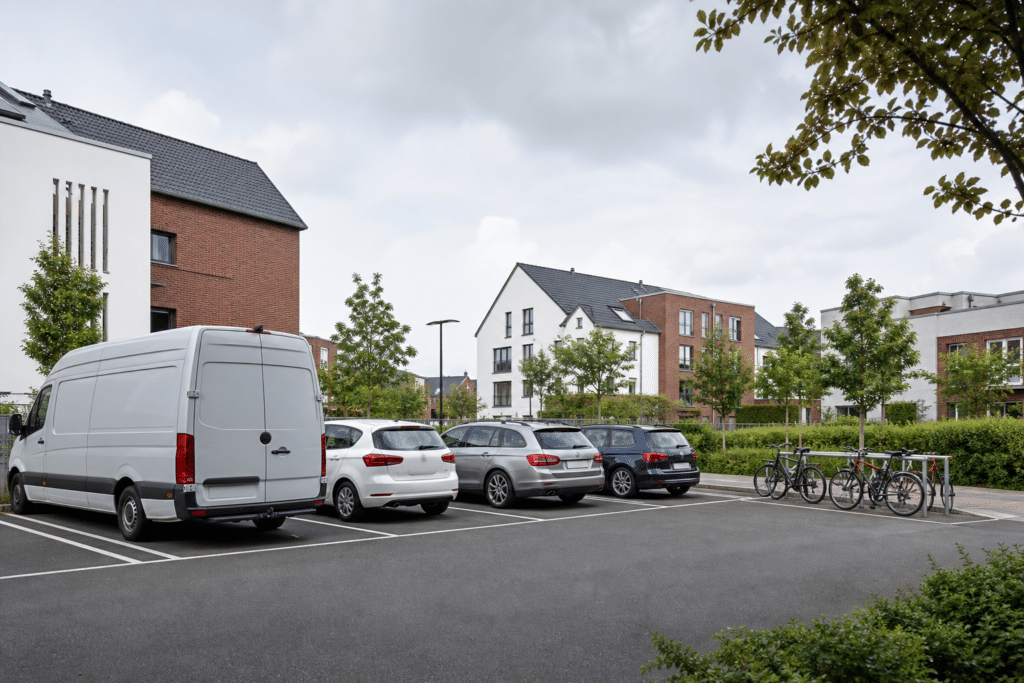
Thursday afternoon at a retail park on the outskirts of town. The car park is full, even though the shops are only moderately busy. If you look more closely, you can see the pattern: many cars have been there since early this morning. They belong to commuters who change trains at the nearby station, local residents without their own parking spaces, and employees from neighbouring offices.
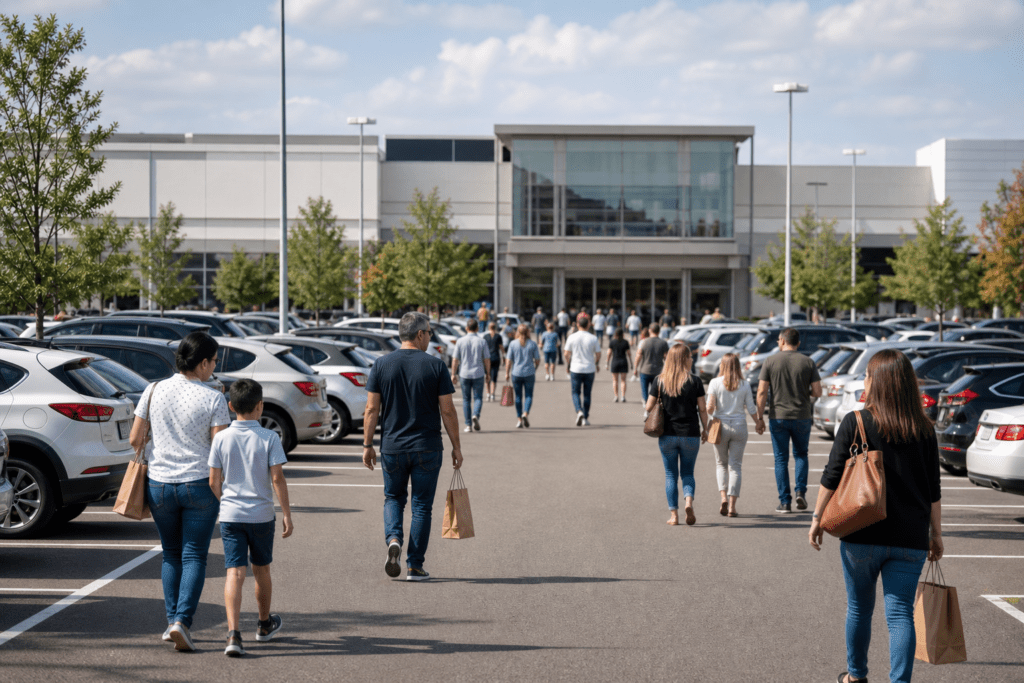
At the supermarket next door, the branch manager sees full car parks, but the sales figures don’t match up. Customers who can’t find a space drive on. Some come back, but many don’t. People parking elsewhere aren’t just a minor issue. They are a systematic drain on turnover.
The true cost of unauthorised parking: a simple calculation
The costs associated with unauthorised parkers are often underestimated because they do not appear on an invoice. They manifest themselves in lost revenue, a decline in customer footfall and growing dissatisfaction amongst tenants.
A sample calculation illustrates the scale of this: a single customer car park space in the retail sector is used an average of six times a day. With an average shopping basket value of 40 euros, this results in a daily turnover of 240 euros per parking space.
If someone who isn’t a regular customer blocks this space for eight hours, we lose four to five transactions. That’s 160 to 200 euros in lost revenue. Per parking space. Per day.
In a car park with 200 spaces, 20 of which are permanently occupied by non-customers, this amounts to a loss of turnover of over 3,000 euros per day. Extrapolated over a year, that amounts to over one million euros. And most customers who cannot find a space do not complain publicly.
The invisible chain reaction
Because unauthorised parkers do not identify themselves, the problem unfortunately remains hidden from operators for a long time. Falling turnover may initially be attributed to other causes: seasonality, competition, or consumer reluctance to spend. In most cases, it is only by taking a closer look at the actual length of time vehicles remain parked that the true pattern becomes apparent.
Tenants in retail parks are usually the first to feel the effects. If footfall falls, so do their takings, which in turn puts pressure on rent negotiations and the centre’s reputation. A full car park is therefore not automatically a good sign.

Why traditional monitoring alone is not enough
Without reliable data, it is almost impossible to quantify the problem of unauthorised parking accurately, let alone tackle it effectively. Spot checks carried out by staff capture only a fraction of the actual incidents and are therefore costly in relation to the results achieved.
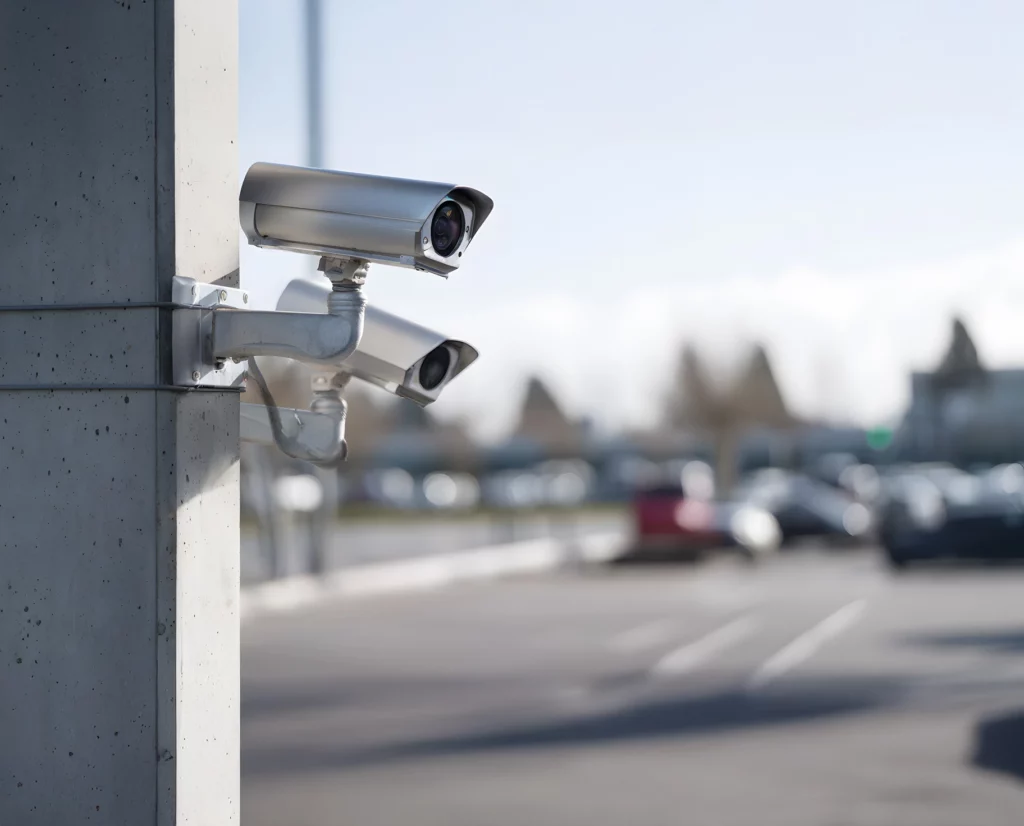
Digital car park monitoring with automatic number plate recognition, on the other hand, provides a complete picture: how many vehicles are parked, for how long, at what time of day, and what proportion of parking is clearly unauthorised. It is only on the basis of this data that effective measures can be devised.
What to do now
- Accurately record dwell times and utilisation rates over a period of at least two to four weeks
- Distinguishing between short-term customer parking and long-term unauthorised parking
- Quantify the economic impact in euros, not just in terms of parking spaces
- Only then should you decide on the appropriate enforcement solution
Anyone who treats unauthorised parking as a revenue issue rather than a minor concern can stop the chain reaction before it manifests itself in falling rental income and dissatisfied tenants.